Some research links cluttered homes to higher cortisol. A 2010 study tracking cortisol levels in women relative to their home environments found a direct correlation between perceived clutter and stress hormone levels throughout the day. The question of how the spaces we inhabit affect our neurobiology is one of the most practically useful in wellness, and one most people approach backwards: they buy things to put in their rooms rather than examining what is already there.
The Cognitive Cost of Visual Noise
Every object in your field of view requires processing. Not consciously — the attention to most objects is automatic and largely invisible — but it has a cost. Research in environmental psychology identifies visual clutter as a consistent source of directed attention fatigue: the low-grade, perpetual deployment of cognitive resources to monitor and process an environment that keeps presenting incomplete tasks, misplaced objects, and unresolved decisions. The brain continues its inventory — the pile of unopened post, the shelf that needs reorganising, the objects that belong somewhere else — even without conscious awareness. This is not anxiety, exactly. It is something more structural: a chronic background cost to the nervous system that accumulates over time.
What Minimalism Actually Means
Minimalism in design is not emptiness. It is intentionality — the curation of a space to include only what serves a clear purpose or offers genuine value, reducing decision fatigue and visual noise simultaneously. The Japanese concept of ma is useful here: the productive use of negative space, the understanding that what is absent shapes experience as powerfully as what is present. A room in which every object has been considered — chosen rather than accumulated — communicates something specific to the nervous system: that this environment is complete, that nothing is unresolved, that no further monitoring is required. This is the condition that the best retreats engineer as a baseline. Sangha Retreat by Octave in Suzhou occupies a campus whose architectural aesthetic draws explicitly on classical Chinese garden philosophy — the balance of open space and precise form, pavilion and pathway, cultivated emptiness and deliberate detail. Aro Hā in New Zealand's Southern Alps is so austere and beautiful in its design that the landscape seems to have generated it rather than the other way around. The design is doing work before the programme begins.
What Light Does to the Brain
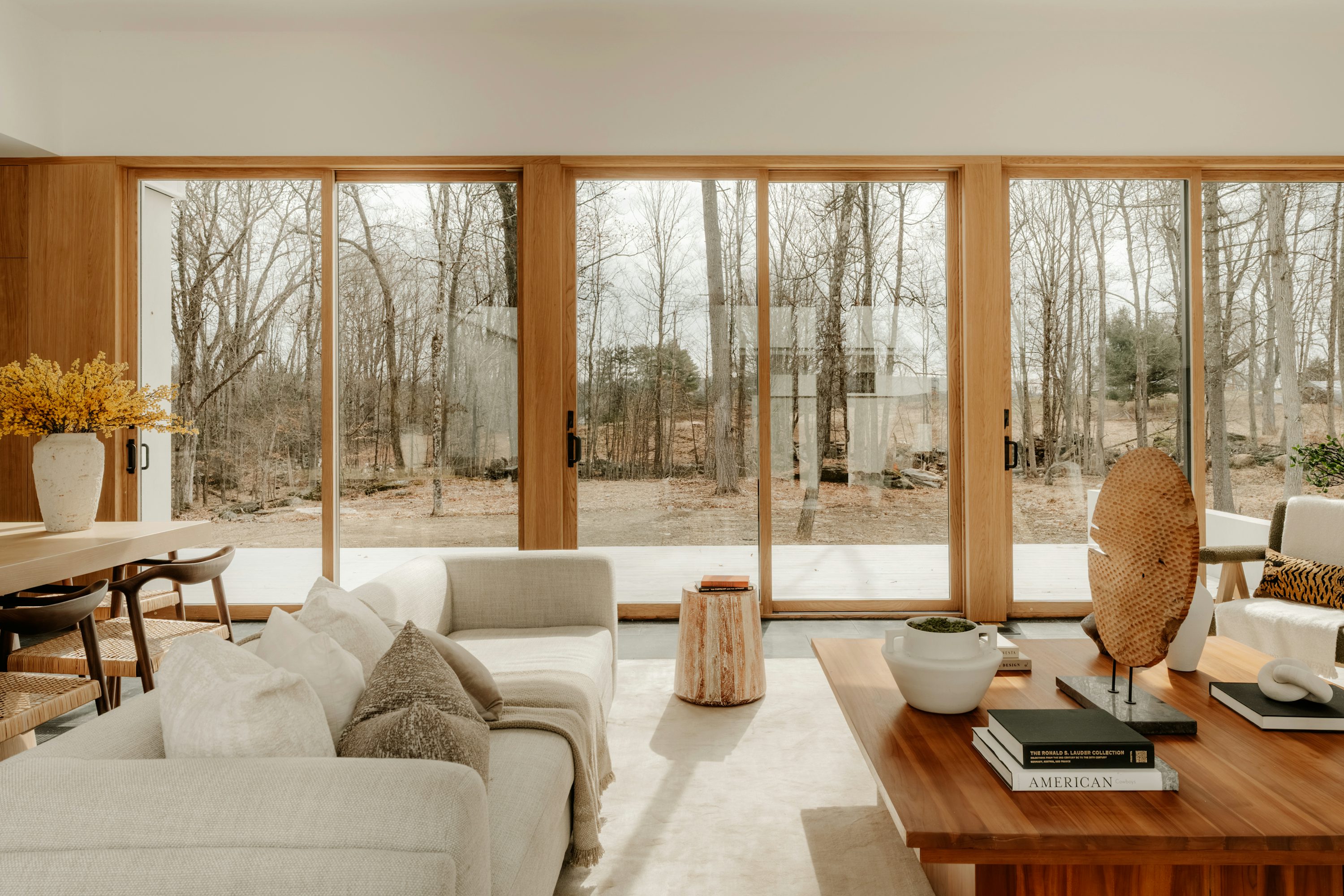
Natural light is the primary signal through which the body calibrates its circadian rhythm — the internal clock governing cortisol release, melatonin production, core body temperature, and ultimately mood and energy across the day. Minimalist design, in its emphasis on large windows and unobstructed sightlines, increases natural light exposure by default. Morning light exposure suppresses melatonin and initiates the cortisol peak that creates the natural energy architecture of a productive day; evening dimming, which open-plan spaces naturally support, allows melatonin production to begin on schedule. Research in environmental neuroscience also suggests that perceived spatial openness reduces amygdala activation — the threat-response centre of the brain — in ways that confined or visually busy environments do not. The experience of spaciousness is often described as calming.
How the World's Best Retreats Understand Space
The relationship between architecture and wellbeing is not incidental at the retreats that take it seriously. It is the foundation on which everything else is built. Golden Door in California has maintained its Japanese aesthetic — shoji screens, raked gravel gardens, teahouse architecture — for nearly seven decades. The removal of visual complexity and the emphasis on natural material and considered proportion creates a daily environment in which the nervous system can genuinely rest. Seven decades of refinement have produced something that does not need to be explained to be felt. Eremito in Umbria takes this further: stone cells converted from a medieval hermitage, spare and warm, the monastery rhythm of simple meals and early sleep. There is no Wi-Fi, no telephone signal, no agenda. The architecture is not a design choice but a therapeutic environment. It is removing what the nervous system had been monitoring.
What You Can Begin at Home
The principles that make a retreat space restorative are replicable at home to a useful degree. The mechanisms are accessible even when the Suzhou garden or the Umbrian forest is not. Start with one area. Not the entire home, but one room or corner committed to stripping back to what is functional and genuinely valued. Remove the objects that are there by default rather than by decision. What remains should serve a purpose or offer real, specific pleasure — not decorative aspiration. Natural materials next: wood, stone, linen, cotton. The textures of natural materials are often described as calming. Then light: maximise natural exposure in the morning and reduce artificial blue-spectrum light in the two hours before sleep. These are structural changes, not rituals. The nervous system responds to them the same way it responds to the retreats that get them right.
FAQ
How does minimalist design improve mental health?
Minimalist design reduces visual clutter, which some research links to stress and mental fatigue. By creating organised, intentional spaces with clear sightlines and natural light, it reduces the brain's background monitoring load, allowing the nervous system to shift from scanning mode into genuine rest.
Can decluttering really reduce stress?
Yes. Studies tracking cortisol levels in relation to perceived home clutter have found an association between clutter and higher stress hormone levels. Removing visual stressors reduces this background load, with physiological effects that extend into sleep quality.
What role does natural light play in mental clarity?
Natural light is the primary regulator of the circadian rhythm, governing cortisol and melatonin production, energy, mood, and cognitive function across the day. Environments that maximise natural light — a core feature of minimalist design — support the body's natural hormone architecture rather than disrupting it.
Is minimalism about having nothing?
No. Minimalism is the practice of intentionality — keeping what is functional and genuinely valued rather than accumulating by default. The goal is a space in which nothing is there by accident, which creates the psychological experience of completeness that most environments fail to provide.
The retreats that understand design as a wellness tool build environments that do restorative work before the formal programme begins. It is worth paying attention to why. Explore mindfulness retreats → Browse all holistic hotels →