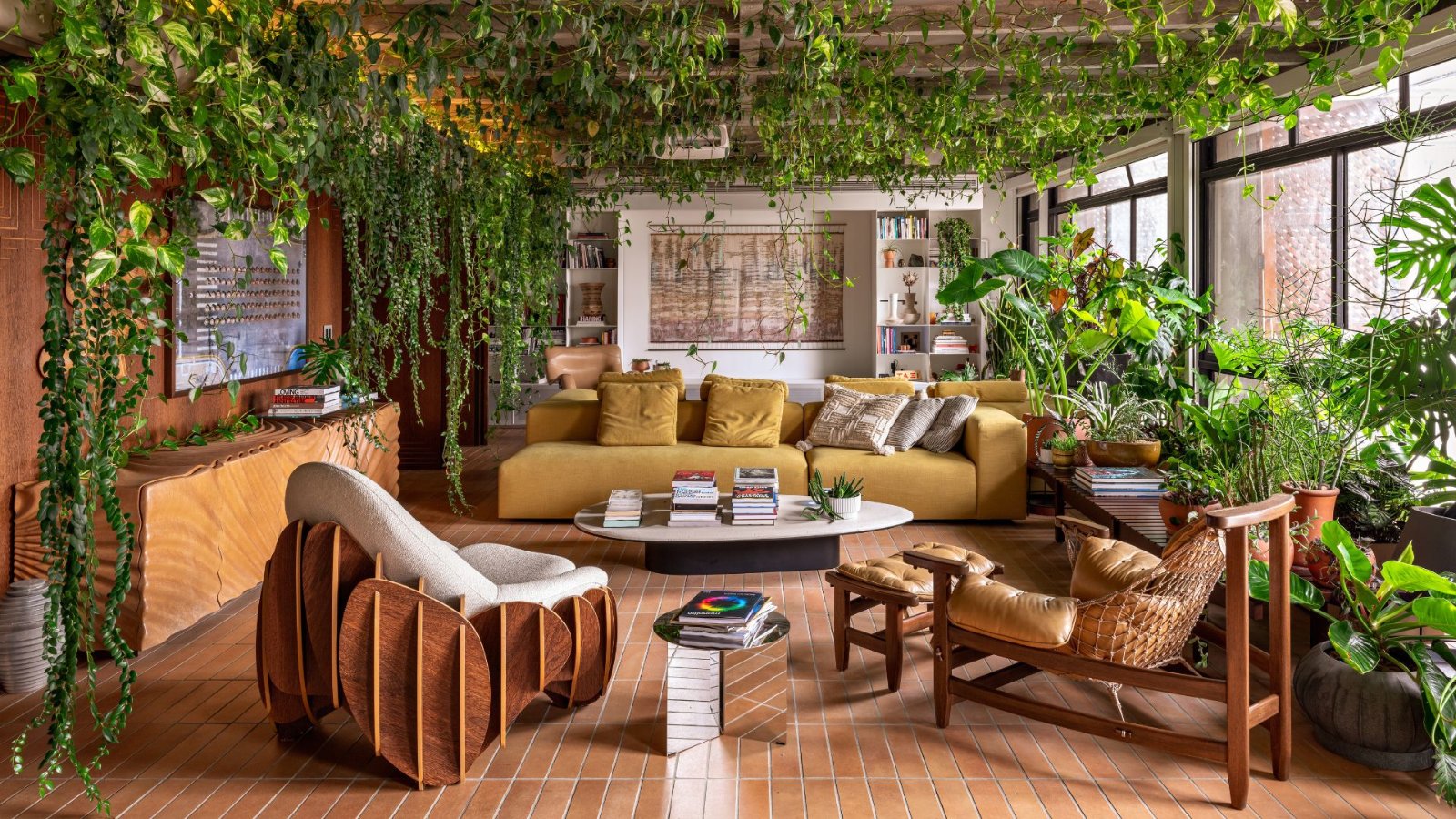
The human eye processes fractal patterns — the branching repetition found in trees, rivers, and coastlines — with measurably less cortical effort than it processes the straight lines and right angles of most built environments. This is not an aesthetic preference. It is a function of roughly two hundred thousand years of evolutionary calibration to a particular kind of visual world, and it is the foundation of what is now a serious field of design science.
A Hypothesis With Decades of Evidence Behind It
In 1984, the biologist E.O. Wilson proposed the biophilia hypothesis: that humans possess an innate, evolutionarily rooted affinity for the natural world, expressed in measurable physiological and psychological responses to natural versus artificial environments. The hypothesis has since accumulated a substantial evidence base. A landmark 1984 study by Roger Ulrich found that hospital patients recovering from surgery in rooms with a view of trees required significantly less pain medication and were discharged earlier than patients with a view of a brick wall — identical medical care, different visual environment, measurably different recovery. Subsequent research has extended this finding into office environments, residential design, and clinical settings, with consistent results: exposure to natural elements, natural light, and organic forms reduces cortisol, lowers blood pressure, and improves measures of attention and cognitive recovery after mental fatigue.
Why Fractals Specifically
Research by the physicist Richard Taylor has identified a more precise mechanism within this broader effect. Fractal patterns of a particular complexity — the branching of a tree, the structure of a fern, the repetition found in a mountain ridgeline — produce measurable reductions in physiological stress markers when viewed, with effects detectable within seconds and a preference that holds consistently across cultures and individual differences. This is the science behind why a well-designed garden, an exposed timber beam, or an unfinished stone wall produces a different felt response than a flat painted surface, even when both are visually pleasant by conventional design standards. The brain is responding to structural complexity that mirrors the patterns it evolved to navigate.
What This Looks Like at Scale
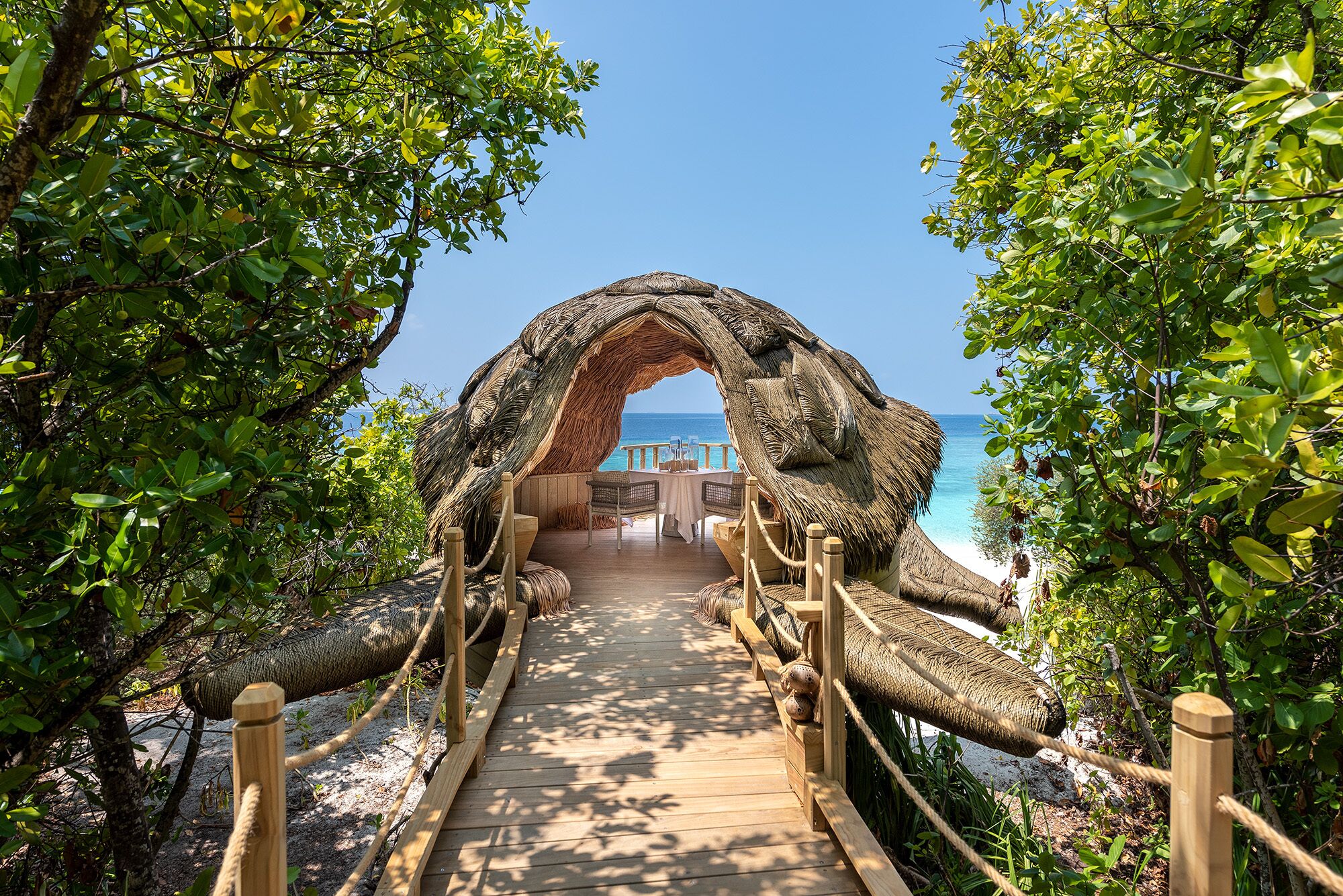
A handful of properties have built their entire architectural identity around this principle, rather than treating it as decorative texture. Post Ranch Inn on California's Big Sur coast was constructed with a founding constraint that no trees be felled for the build — the treehouse rooms were instead built around and through the existing redwood canopy. The result is an environment in which the architecture does not impose itself on the landscape's fractal complexity but is woven directly into it. Bambu Indah on the Ayung River gorge outside Ubud is constructed almost entirely from bamboo, river stone, and reclaimed wood by Balinese artisans working in traditional methods — materials whose grain, joint, and texture carry the same structural irregularity the eye is drawn to in unmanaged nature. Nothing in the build is uniform, and that irregularity is precisely what makes it restorative to inhabit. Feuerstein Nature Family Resort in the South Tyrolean Alps extends the principle into the building's operations: all electricity drawn from the resort's own hydroelectric plant, all food sourced regionally, the spa heated by the same mountain streams that power the property. The biophilic logic here is not confined to materials. It is structural to how the building functions.
Designing a Home Sanctuary
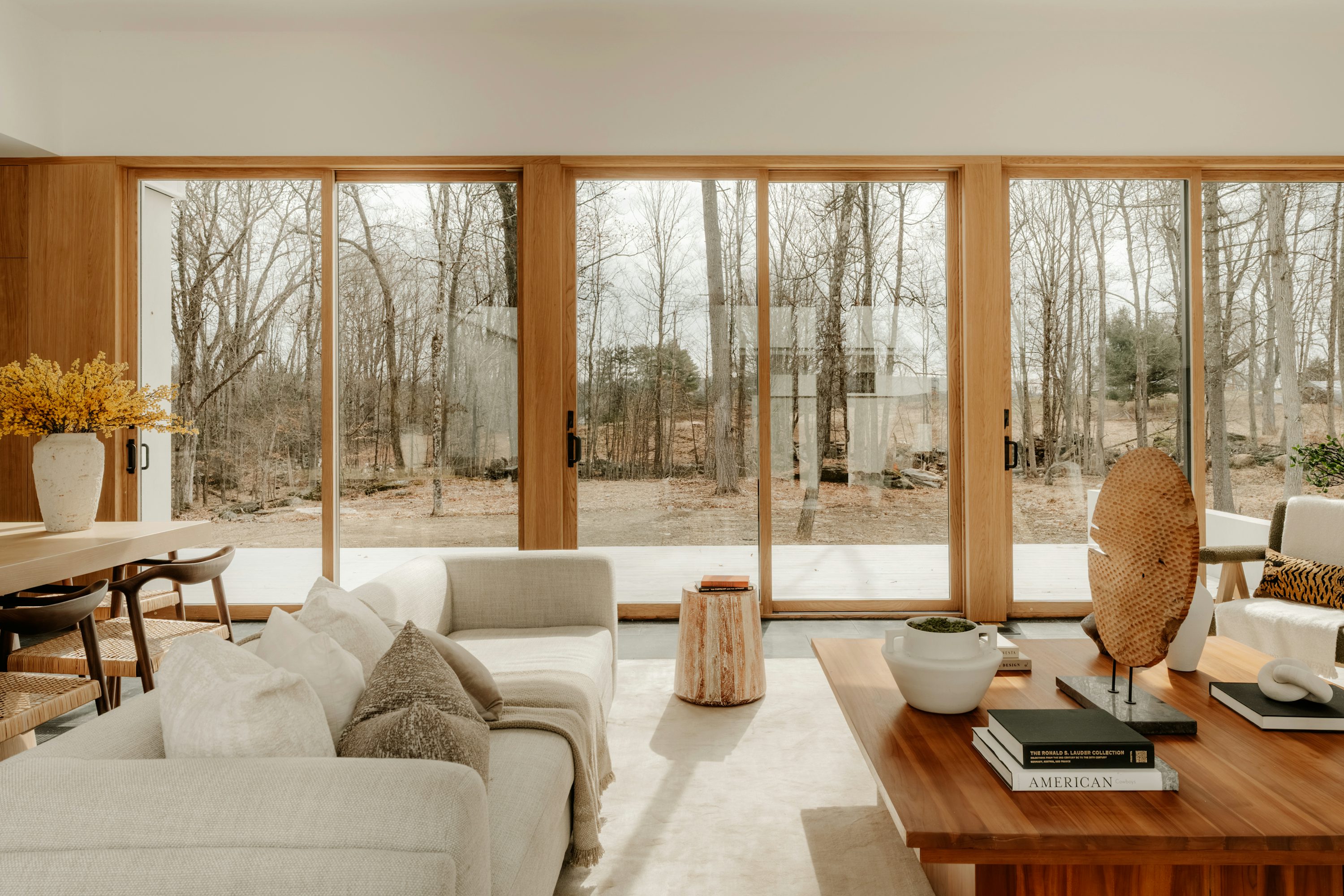
The principles transfer to domestic spaces without requiring a redwood forest or a Balinese river gorge. Natural materials — unfinished wood, stone, linen, wool — carry the textural irregularity that synthetic materials cannot replicate, and the difference is detectable to the nervous system even when it isn't consciously noticed. Maximising sightlines to any available greenery, even a single mature tree visible from a window, meaningfully extends the Ulrich effect into ordinary domestic life. Indoor plants, chosen for varied leaf structure rather than uniform shape, introduce a degree of fractal complexity that flat or sparse plantings do not. And natural light, prioritised over artificial lighting wherever the building allows it, supports both the visual and circadian dimensions of the same underlying biological need.
FAQ
What is biophilic design?
Biophilic design is the practice of incorporating natural materials, forms, light, and spatial patterns into built environments, based on the scientific premise that humans have an innate physiological and psychological affinity for the natural world. It extends beyond decoration into structural and material choices.
Does looking at nature actually reduce stress?
Yes. Research dating to Roger Ulrich's 1984 hospital study and extended substantially since has found consistent reductions in cortisol, blood pressure, and recovery time associated with visual or physical exposure to natural elements, compared with purely built environments.
What are fractal patterns and why do they matter in design?
Fractal patterns are repeating structures found throughout nature — in tree branches, river deltas, and coastlines — characterised by self-similarity across different scales. Research has found that viewing fractal patterns of moderate complexity produces measurable physiological stress reduction, which is part of why natural materials and forms feel restorative in built spaces.
How can I introduce biophilic design at home without a renovation?
Start with material substitution rather than structural change: natural fibres over synthetic ones, unfinished wood and stone surfaces where possible, and plants with varied leaf structure rather than uniform shape. Maximising any existing view of greenery and prioritising natural light over artificial lighting are similarly low-cost, high-impact changes.
The buildings that understand this are not simply beautiful. They are doing physiological work on every guest who walks through them, whether or not the guest ever learns the word for it. What surrounds the body is one lever for recovery; what is deliberately removed from it is another. Explore nature retreats → Browse all holistic hotels →