There is a state between waking and sleep that most people pass through so quickly they have no memory of it. Yoga nidra is the practice of inhabiting that state deliberately — not as a transition, but as a destination. What the neuroscience has found there is genuinely surprising: delta brainwave activity characteristic of deep dreamless sleep, in a practitioner who remains fully conscious. The tradition has maintained this for over a thousand years. The laboratory is catching up.
What the EEG Shows
Brainwave states are measurable through electroencephalography, and they map consistently to states of consciousness. Beta waves — 14 to 30 Hz — characterise alert, active thinking. Alpha waves — 8 to 13 Hz — correspond to relaxed, receptive states. Theta waves — 4 to 7 Hz — appear at the edge of sleep, in deep meditation, and during creative reverie. Delta waves — 0.5 to 3 Hz — are the signature of deep, dreamless sleep, and are associated with its most restorative phase, during which growth hormone is released and cellular repair runs at its highest rate. In experienced yoga nidra practitioners, EEG studies have recorded sustained delta activity while the practitioner remains awake and responsive. This is neurologically unusual. In most contexts, delta activity and conscious awareness are mutually exclusive. Yoga nidra appears to uncouple them.
Non-Sleep Deep Rest: The Contemporary Frame
Andrew Huberman's research on what he terms Non-Sleep Deep Rest — NSDR — provides a contemporary scientific framework for what yoga nidra practitioners have described empirically for decades. Drawing on neuroscience research from multiple laboratories, the work identifies the hypnagogic state — the threshold between waking and sleep — as a period of exceptional neuroplasticity: the brain in this state is reorganising and consolidating at a rate comparable to sleep, while retaining a degree of conscious awareness. Specifically, NSDR appears to restore catecholamine levels — the dopamine, norepinephrine, and epinephrine depleted by sustained cognitive effort — with an efficiency that brief sleep cannot achieve and that no amount of passive waking rest approximates. Twenty minutes of genuine hypnagogic state is not equivalent to twenty minutes of sleep. In certain contexts — following intense cognitive work, during recovery from burnout, in the transition between significant periods of activity — it may be more restorative.
What the Practice Actually Involves
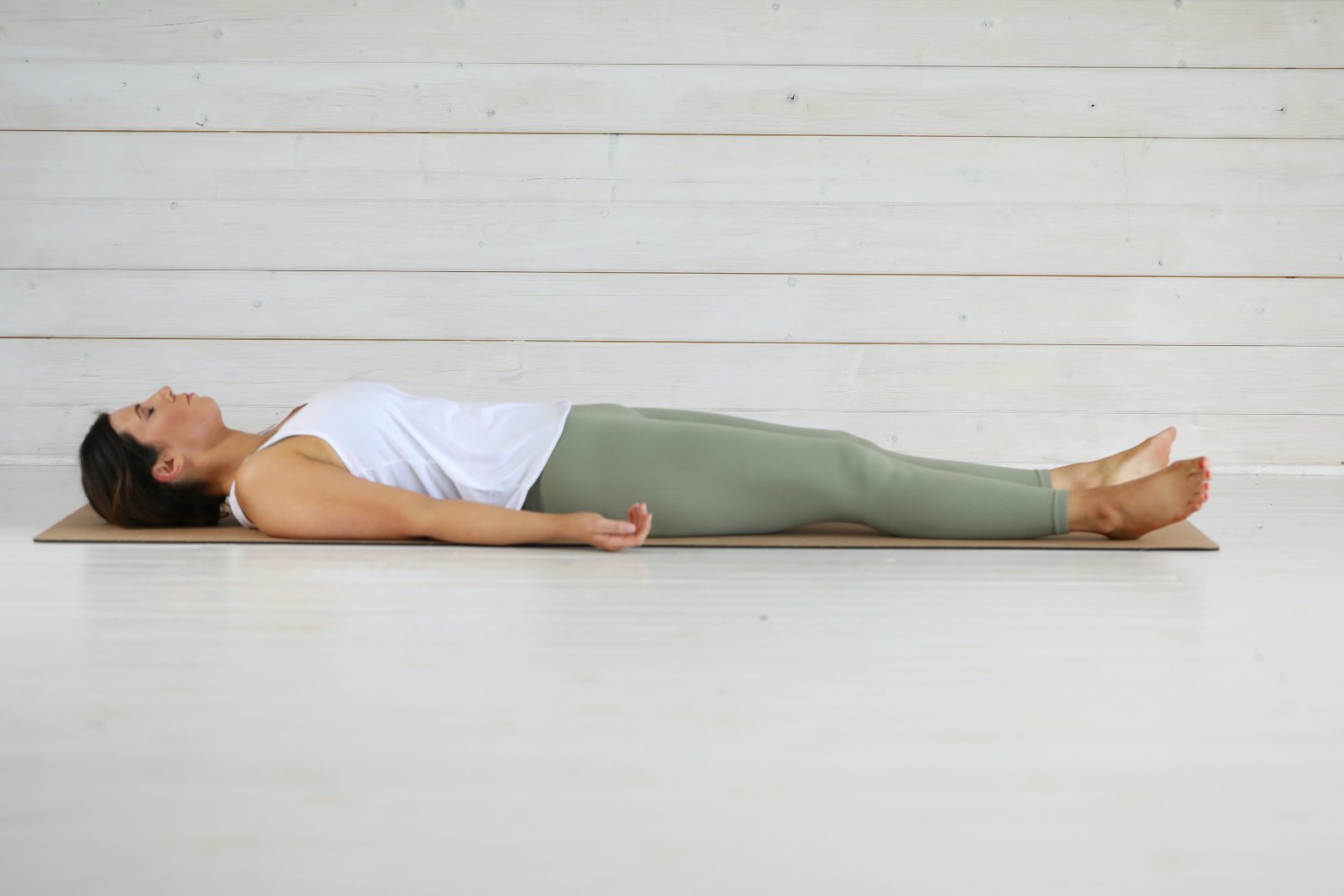
Yoga nidra is conducted lying down in savasana — the supine rest position. The practitioner is guided through a structured sequence that typically begins with a sankalpa, a short intention set in the hypnagogic state where it enters without the resistance of ordinary critical awareness, followed by a systematic rotation of consciousness through the body's surface and interior, then a sequence of paired opposites — heat and cold, heaviness and lightness — that progressively deepens the state, and finally a period of sustained hypnagogic rest before a gradual return to ordinary waking consciousness. The structure is precise and has been remarkably stable across the different lineages that have transmitted the practice. The reason, apparent from the neurological research, is that the rotation of consciousness protocol is an efficient and reliable method for moving the brain from beta through alpha and theta into the delta-adjacent state that is the practice's destination. The precision is not ritual. It is methodology.
How the Strongest Programmes Deliver It
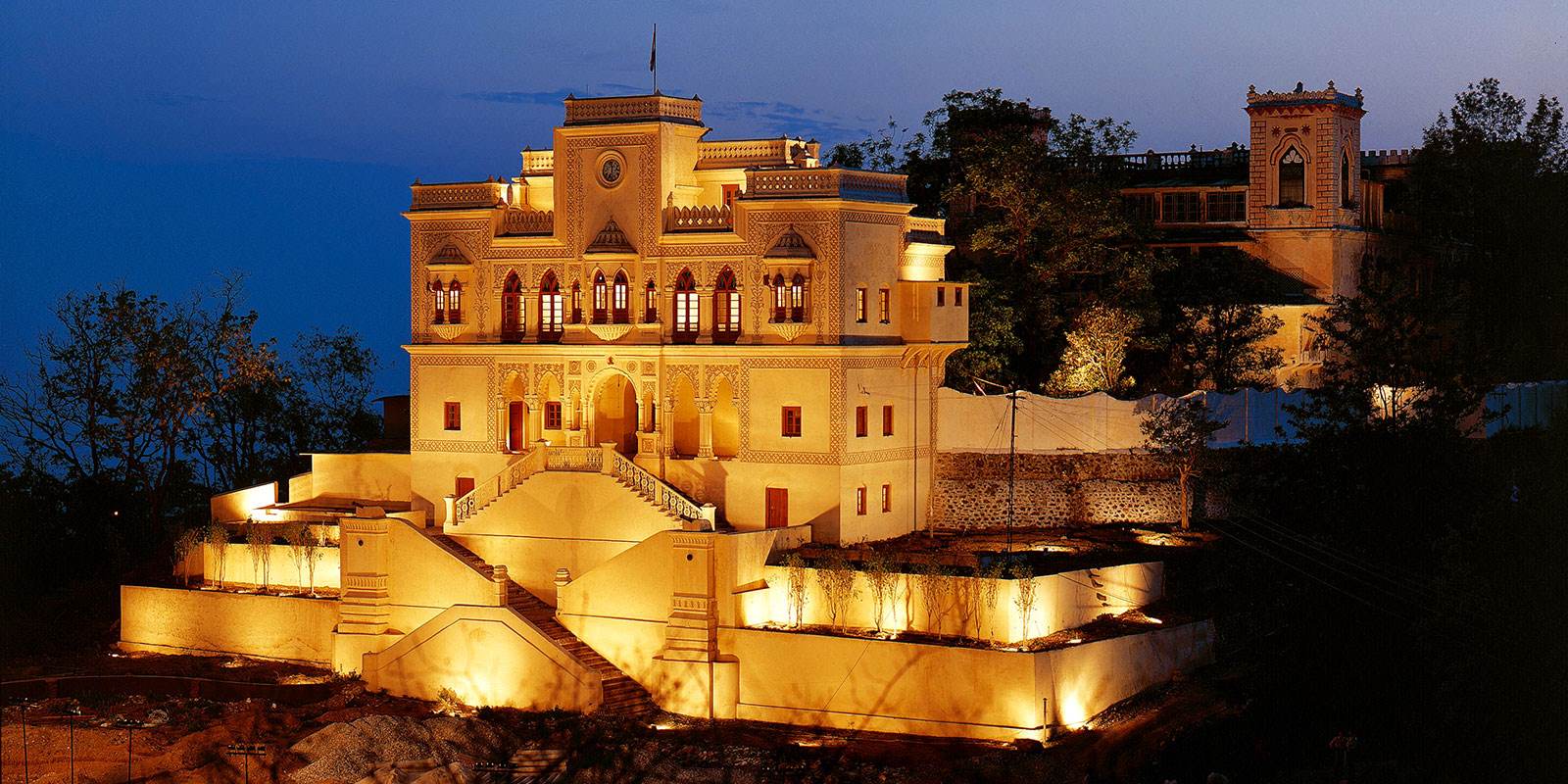
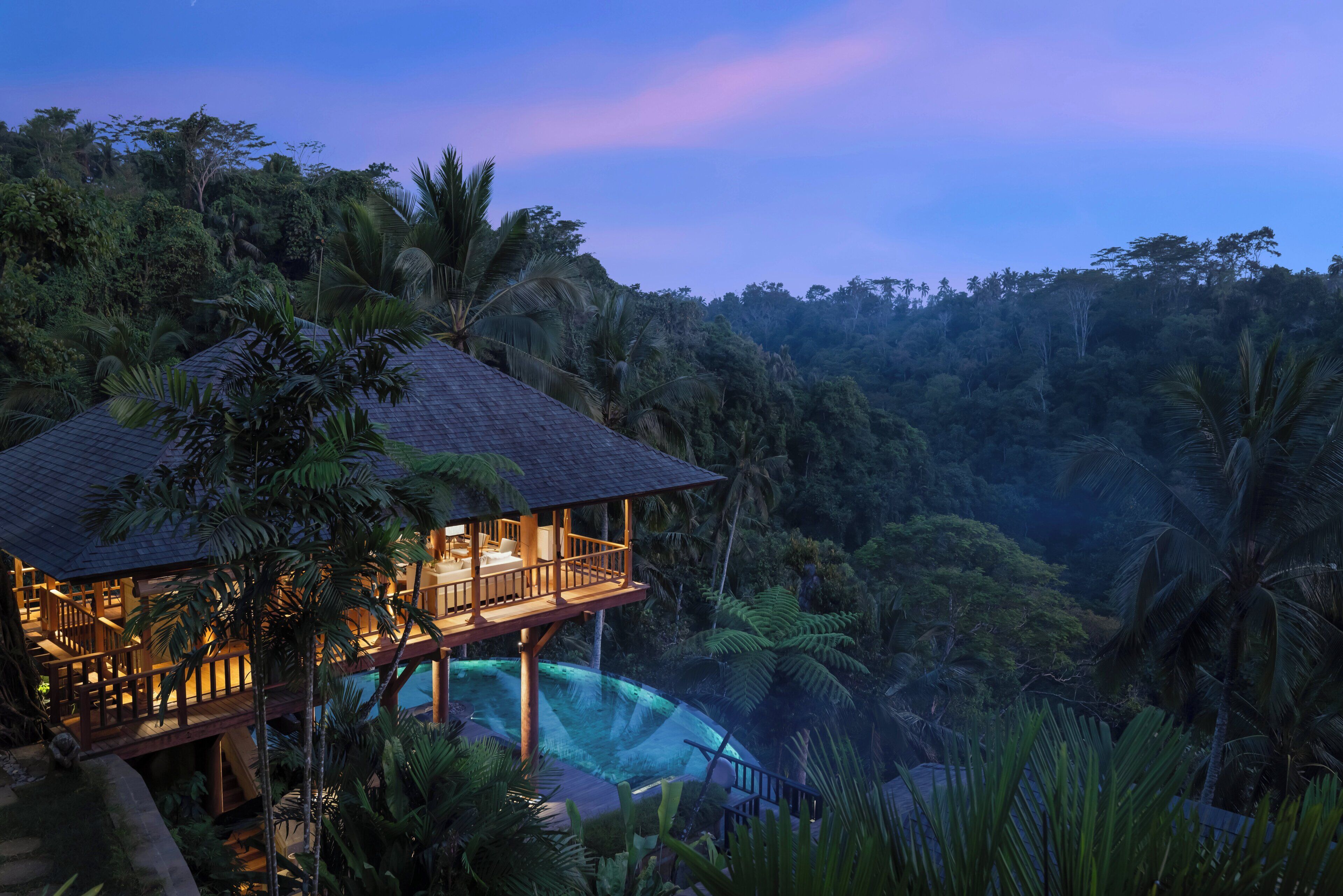
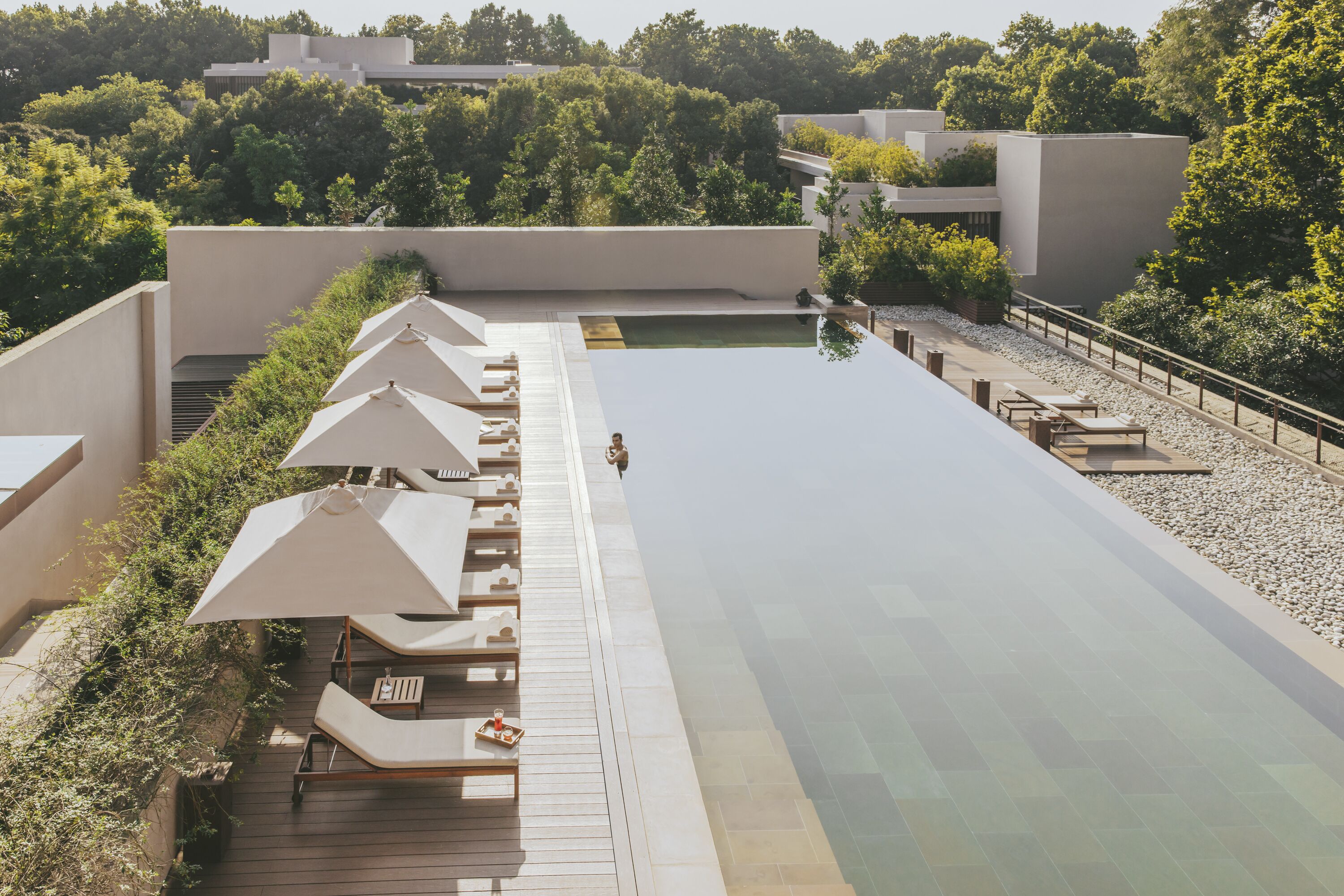
The setting matters considerably. Yoga nidra in a room designed for contemplative practice, in an environment with natural acoustic quiet, produces more rapid state induction than the same protocol in a generic space. The practice is accessible without specialist facility, but it is deepened by one. Six Senses Vana in the Doon Valley at the base of the Mussoorie Hills has one of the most carefully considered yoga nidra programmes available in a luxury wellness context — delivered by resident practitioners within a multi-tradition programme that positions it alongside Ayurveda, Tibetan medicine, and yoga as complementary approaches to the same restorative outcomes. The sal forest estate, the quality of the Himalayan air, and the contemplative architecture create the environmental conditions in which the practice's depth is most readily accessible. Ananda in the Himalayas above Rishikesh situates yoga nidra within the classical framework of the Indian yoga tradition, delivered by practitioners whose lineage training gives them a precision with the protocol that workshop-trained teachers cannot fully replicate. The Himalayan foothills setting — the specific quality of the light and air at this altitude, the Ganges below — provides an environment that has been used for contemplative practice of this kind for thousands of years. It has not stopped working. Sangha Retreat by Octave in Suzhou integrates yoga nidra within its Five Elements TCM framework, positioning the practice within a daily structure calibrated to the circadian rhythm and the energetic qualities of different times of day. The meditation spaces — classical Chinese garden architecture, natural materials, considered silence — create a practice environment in which the transition into hypnagogic states begins before the guide's first instruction.
FAQ
What is yoga nidra?
Yoga nidra is a guided meditation practice that systematically induces the hypnagogic state — the threshold between waking and sleep — and sustains conscious awareness within it. EEG studies of experienced practitioners have recorded delta brainwave activity while consciousness is maintained, a neurological combination not produced by ordinary relaxation or standard sleep.
What is NSDR and how does it relate to yoga nidra?
Non-Sleep Deep Rest, the term used in Andrew Huberman's neuroscience research, describes the physiological state produced by practices that access the hypnagogic threshold with conscious awareness. Yoga nidra is one of the most established and structurally refined practices for producing this state. NSDR is the contemporary scientific frame for something the yoga nidra tradition has been refining for over a thousand years.
How is yoga nidra different from sleep?
Yoga nidra produces delta brainwave activity — associated with deep sleep — while maintaining conscious awareness. The restorative effects include catecholamine restoration and neuroplastic reorganisation comparable to sleep, but in a compressed timeframe and with the added dimension of conscious access to the hypnagogic state. It does not replace sleep but produces a distinct set of restorative outcomes that sleep does not.
How long is a typical yoga nidra session?
Sessions typically run between twenty and forty-five minutes. Research on catecholamine restoration through NSDR suggests that as little as twenty minutes of genuine hypnagogic state produces significant physiological effects. Longer sessions allow deeper state stabilisation and more sustained access to the delta-adjacent range.
The hypnagogic state is not nothing. It is a specific neurological environment with specific properties — and yoga nidra is the most precise tool available for spending time in it deliberately. Explore mindfulness retreats → Explore yoga retreats →