Every wellness protocol eventually runs into the same clock: the one in the suprachiasmatic nucleus, a cluster of roughly 20,000 neurons sitting just above the optic chiasm that governs the body's circadian rhythm. It responds to almost nothing except light — its intensity, its color temperature, its timing. Most modern life spends the evening feeding it exactly the wrong signal: screens, streetlights, ambient glow bright enough to convince the brain that dusk hasn't really arrived. Star bathing — extended, deliberate exposure to a genuinely dark night sky — is emerging as one of the more precise correctives available.
The Suprachiasmatic Nucleus and the Case for Real Darkness
The suprachiasmatic nucleus, often abbreviated SCN, synchronizes nearly every major physiological rhythm — core body temperature, cortisol release, digestive timing, and critically, the production of melatonin — to the roughly 24-hour cycle of light and dark. It does this primarily through specialized retinal cells that are especially sensitive to blue wavelengths, the kind emitted heavily by screens and LED lighting and largely absent from candlelight, firelight, or starlight.
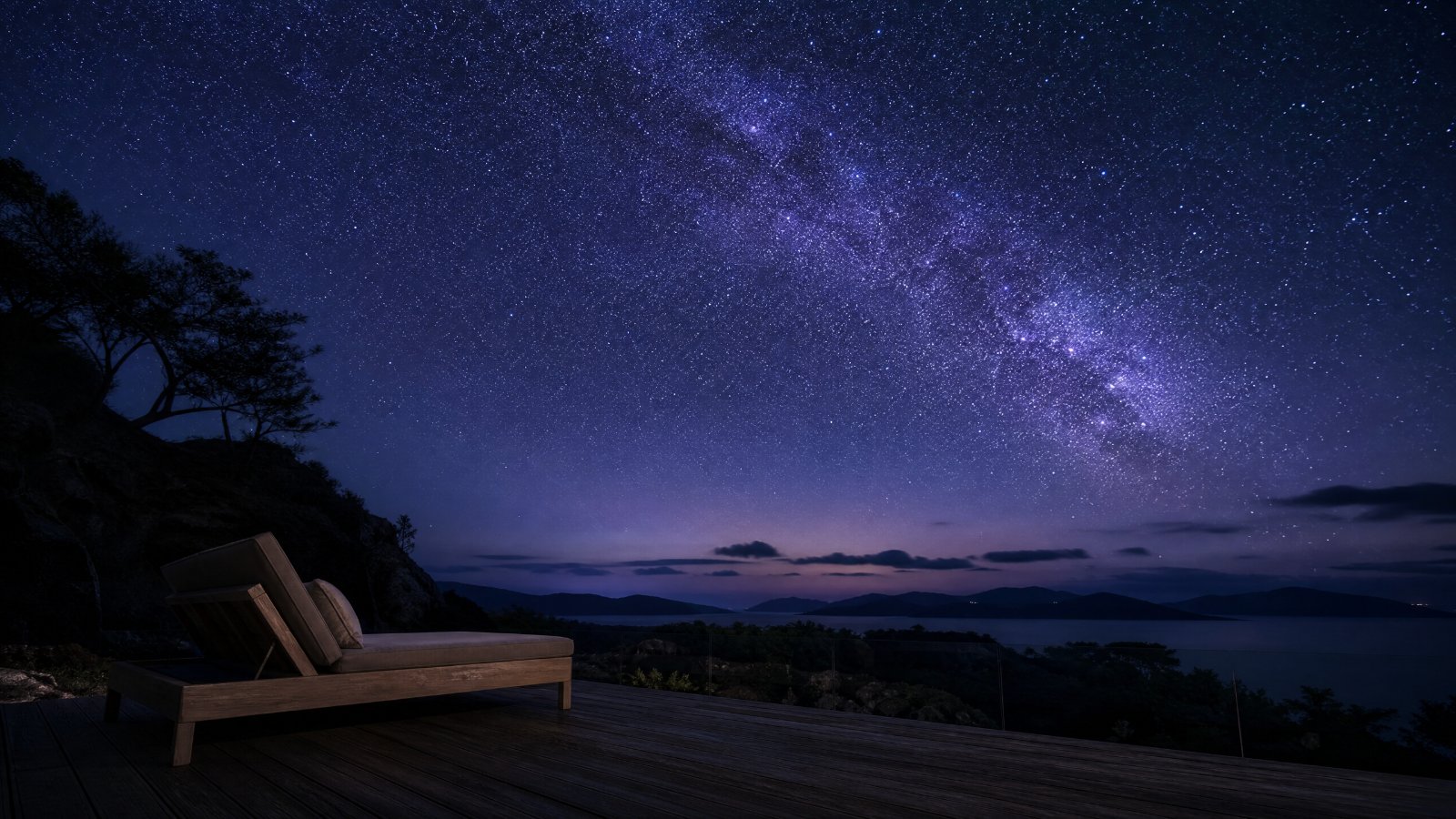
A night sky free of artificial light produces a light environment several orders of magnitude dimmer than even a modestly lit room. Under a true dark sky, the SCN receives an unambiguous signal: night has arrived, and melatonin production can proceed unsuppressed. Under the blue-heavy glow of a typical evening — television, laptop, bathroom light — that signal is muddied, sometimes for hours after exposure ends.
What Stargazing Does That Simply "Turning Off Screens" Doesn't
Sleep hygiene advice has long included the instruction to dim lights and put devices away before bed, and there is some evidence behind it. Star bathing goes a step further: it doesn't just remove the disruptive signal, it adds a specific corrective one. Time spent under a genuinely dark sky, ideally with limited artificial light for an hour or more before sleep, gives the SCN a strong, unambiguous darkness cue rather than the ambiguous dimness of a screen-free but still artificially lit room.
There's a sensory dimension that matters here too, distinct from the strictly circadian mechanism. Research on awe — the emotional response to stimuli that exceed the mind's existing frame of reference — has repeatedly used night sky exposure as a study condition, alongside canyons and mountain vistas, because a genuinely dark sky filled with visible stars reliably produces the same "small self" response and associated drop in self-focused rumination. The night sky, in other words, appears to work on the nervous system through two separate channels at once: a photobiological one, via the SCN and melatonin, and a psychological one, via awe.
Where to Find the Dark
Genuine star bathing requires genuine darkness, which increasingly means seeking out designated dark sky locations, since light pollution has erased the effect for most of the world's population centers. Post Ranch Inn, perched on the Big Sur cliffs with the Santa Lucia Mountains behind it and the Pacific below, sits far enough from significant light pollution that the property has built stargazing directly into its evening programming, using the site's elevation and coastal isolation as a functioning dark-sky asset rather than an incidental perk.
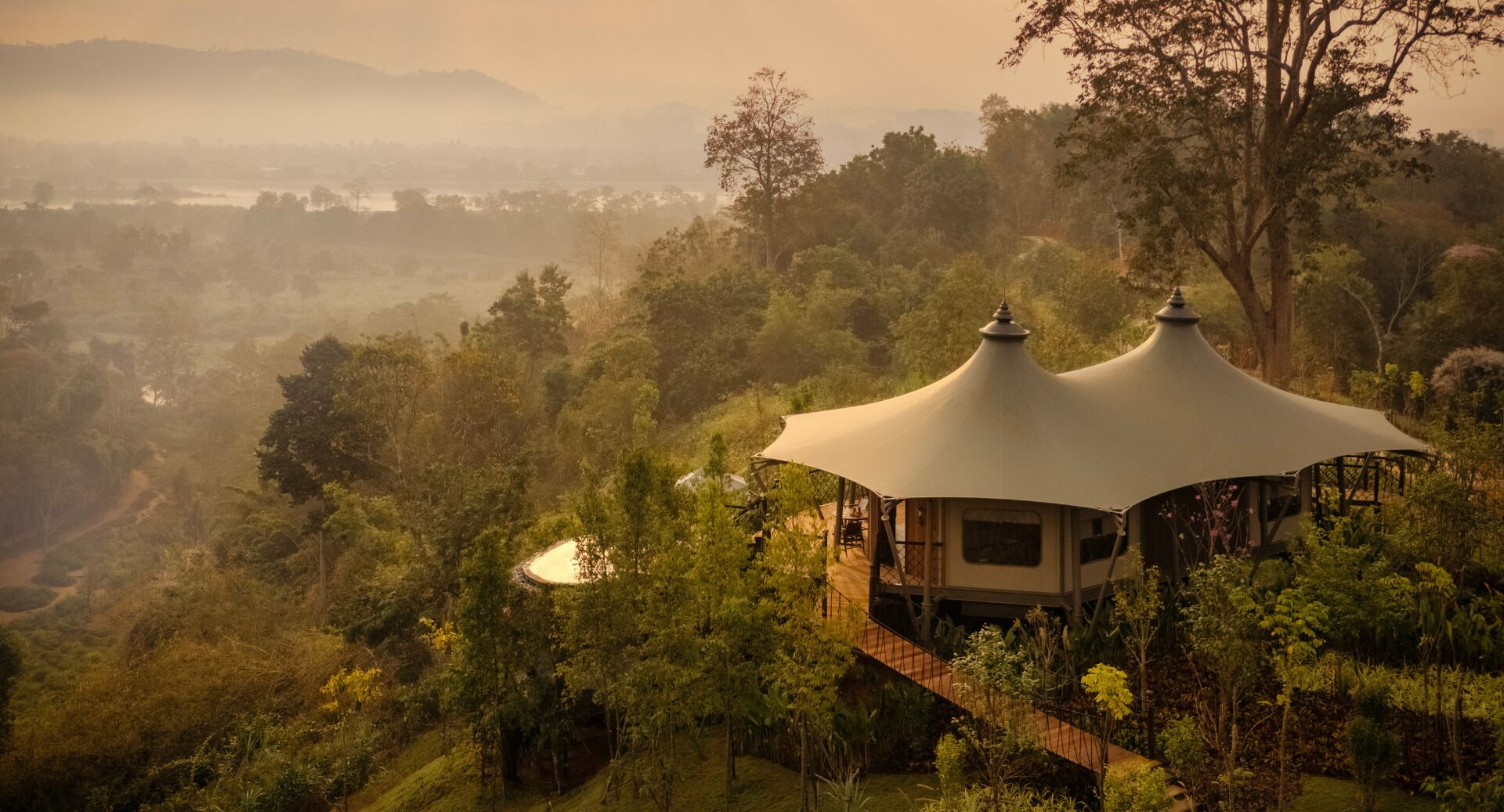
Nayara Tented Camp, in the rainforest surrounding Costa Rica's Arenal Volcano, offers a different version of the same principle. With minimal ambient light from the surrounding primary forest and the tented villas built without the light infrastructure of a conventional hotel wing, the property's night sky exposure is close to unfiltered — and paired with a rainforest soundscape that, guests consistently report, deepens rather than competes with the effect.
Building a Star Bathing Practice Into a Stay
The protocol itself is straightforward, which is part of its appeal: minimal light exposure in the hour or two before the session, genuine time outdoors under open sky, and ideally several consecutive nights rather than a single occasion, since circadian entrainment responds to repeated, consistent signals more than isolated exposure. A retreat that offers stargazing only once gives you little chance to settle into it. One that structures it as a nightly rhythm — dimming interior lighting, timing dinner earlier, building in unhurried time outdoors after dark — is working with the SCN rather than around it.
Does star bathing actually improve sleep, or is the effect mostly psychological?
Both channels appear to be real and separate. The circadian mechanism — genuine darkness supporting unsuppressed melatonin production — is thought to have a physiological basis via the SCN. The awe-related psychological effect, involving reduced self-focused rumination, is a distinct but complementary pathway. Neither requires the other to produce a benefit, and a well-designed evening protocol engages both.
How dark does the sky need to be for this to work?
Meaningfully darker than an average suburban backyard. Locations rated on the Bortle scale — a standard measure of night sky darkness — at Class 1 through 3 offer genuinely unfiltered starlight; most populated areas fall into Class 6 or higher, where the effect is substantially diminished. Coastal cliffs, high elevation, and remote forest settings tend to score well largely because they're distant from artificial light sources.
Can this be replicated at home without traveling somewhere remote?
Partially. The circadian half of the protocol — dimming lights, avoiding screens, timing the evening consistently — travels well. The specific awe response tied to an unobstructed, star-filled sky is harder to replicate under most home skies, which is where a genuine dark-sky setting adds something a bedroom routine can't.
For more on how sensory design factors into a stay, browse our luxury wellness collection.