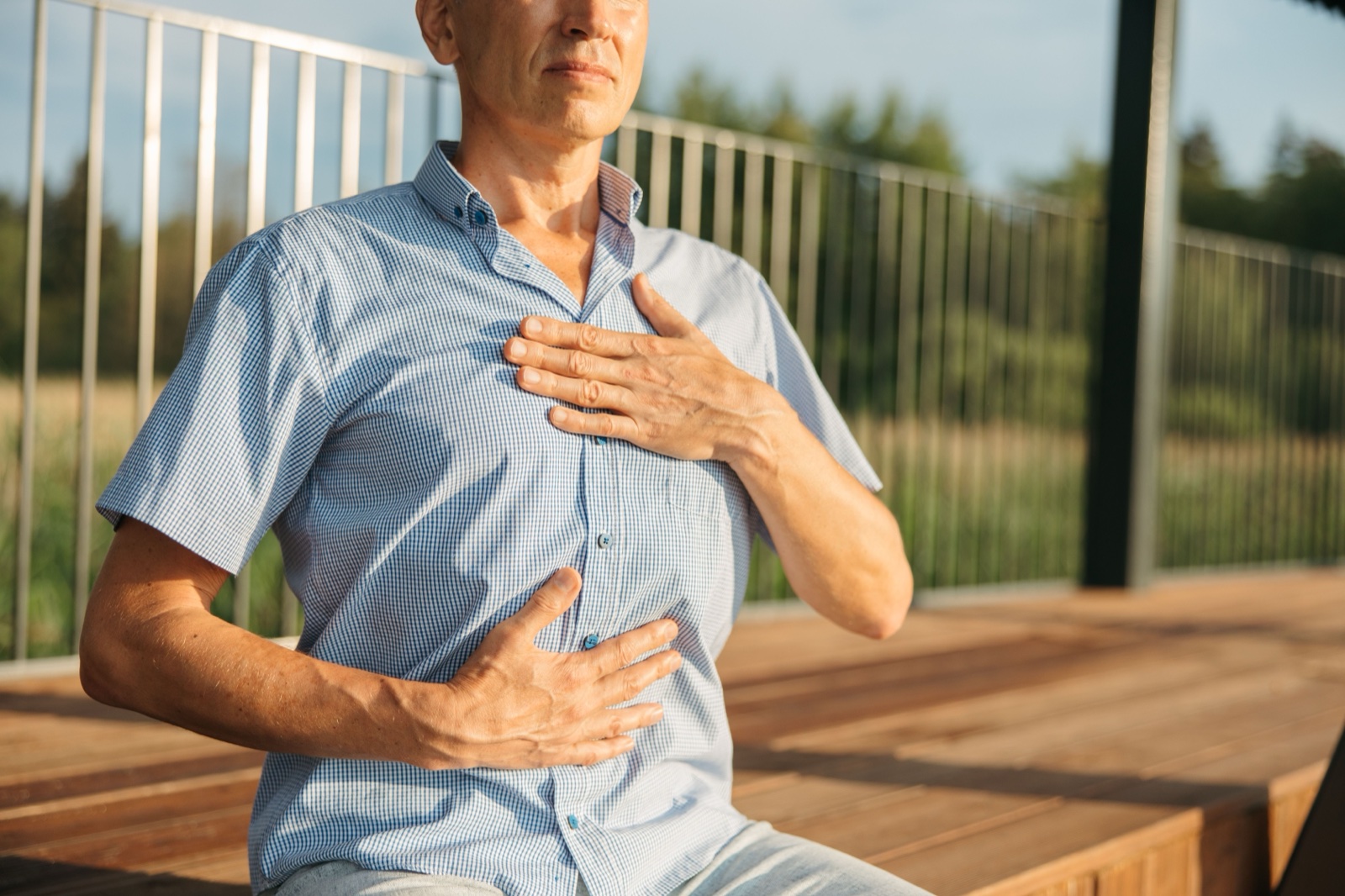
How Do You Try Slow-Exhale Breathing?
Breathe in through your nose for a count of four, then breathe out slowly for a count of eight. Repeat for two to five minutes. That is the whole exercise.
Sit or lie down somewhere comfortable, and keep the breath gentle rather than forced. The aim is an exhale that is longer than the inhale, so the ratio matters more than the exact numbers. If eight feels too long, try in for three and out for six.
Stop and breathe normally if you feel dizzy or uncomfortable.
What should you expect? It varies, but in the Stanford study described below, people said they felt less anxious after their sessions. Think of it as a tool for the moment rather than a lasting fix.
Why Would a Longer Exhale Help?
Your heart rate speeds up slightly as you breathe in and slows slightly as you breathe out. This link between breath and heartbeat is well established. It is why researchers expected long exhales to be worth testing.
Breathing is also unusual among body functions. Your heartbeat and digestion run without your thinking about them. Breathing runs on its own too, but you can take over and change it on purpose.
Researchers suspect the vagus nerve, the long nerve that links your brain to your heart and gut, plays a part, though that idea is not proven. Our guide to the vagus nerve explains how some practitioners track small changes in the gaps between heartbeats. They use this to see how the body copes with stress.
You may also hear this explained through "polyvagal theory". It is a model some practitioners use to describe how the body responds to safety and threat. Scientists debate it, and nothing in this article depends on it.
What Are Three Simple Breathing Techniques?
Three techniques are worth knowing: slow exhale, box breathing and cyclic sighing. Try each for a few minutes at a time.
Slow exhale. Breathe in for four and out for eight, as described above. Keep the exhale longer than the inhale.
Box breathing. Breathe in for four, hold for four, breathe out for four, and hold for four. Repeat. Shorten the counts if you feel any strain. This pattern has been used in military training. In the Stanford study, people who practised it reported a lift in mood after their sessions.
Cyclic sighing. Breathe in slowly through your nose. When your lungs feel full, take a second short breath in on top. Then breathe out slowly through your mouth until your lungs feel empty. Repeat. It is sometimes called the physiological sigh. This was the technique that stood out in the Stanford study.
There is no need to pick one for good. In the Stanford study, benefits grew with more days of practice. The technique you will actually keep doing is a sensible choice.
If you have a heart or lung condition, are pregnant, or have panic disorder, check with a doctor before trying breath holds or fast, forceful breathing.
What Does the Research Actually Show?
One study gives a useful pointer here, but it is not a settled verdict.
In 2023, a team at Stanford University published the study in Cell Reports Medicine (Yilmaz Balban et al.). It followed 108 healthy adults, mostly Stanford undergraduates, for one month. Each person was randomly given one daily five-minute practice. The choices were cyclic sighing, box breathing, a fast-breathing style with breath holds, or mindfulness meditation.
People in every group reported feeling less anxious after their sessions. The standout was cyclic sighing. Its group had a bigger lift in mood than the meditation group. Their breathing rate also fell further over the month.
The study has limits. It was run online, it was small, the participants were mostly Stanford undergraduates, and it lasted one month.
So the evidence for short-term effects is encouraging but still early. The evidence for lasting change is thinner. Benefits grew with more days of practice, which suggests regular practice matters more than a single session. A guided session can be a useful tool in the moment. It is not a permanent fix.
Can You Learn Breathwork at a Retreat?
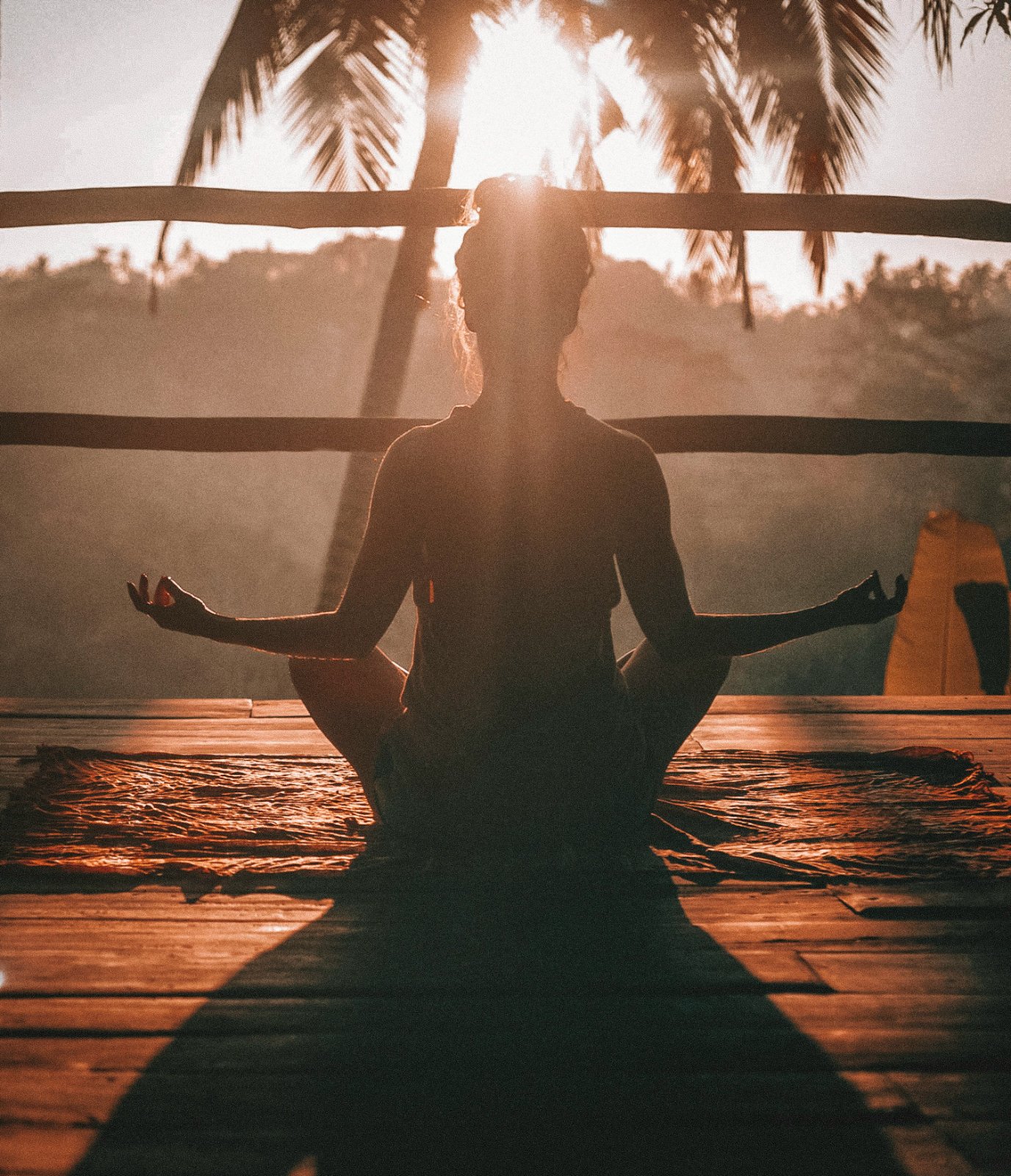
Yes, and a trained instructor can give feedback that a video cannot. Deliberate breathing is a central part of many yoga practices, so yoga retreats are a natural place to learn it.
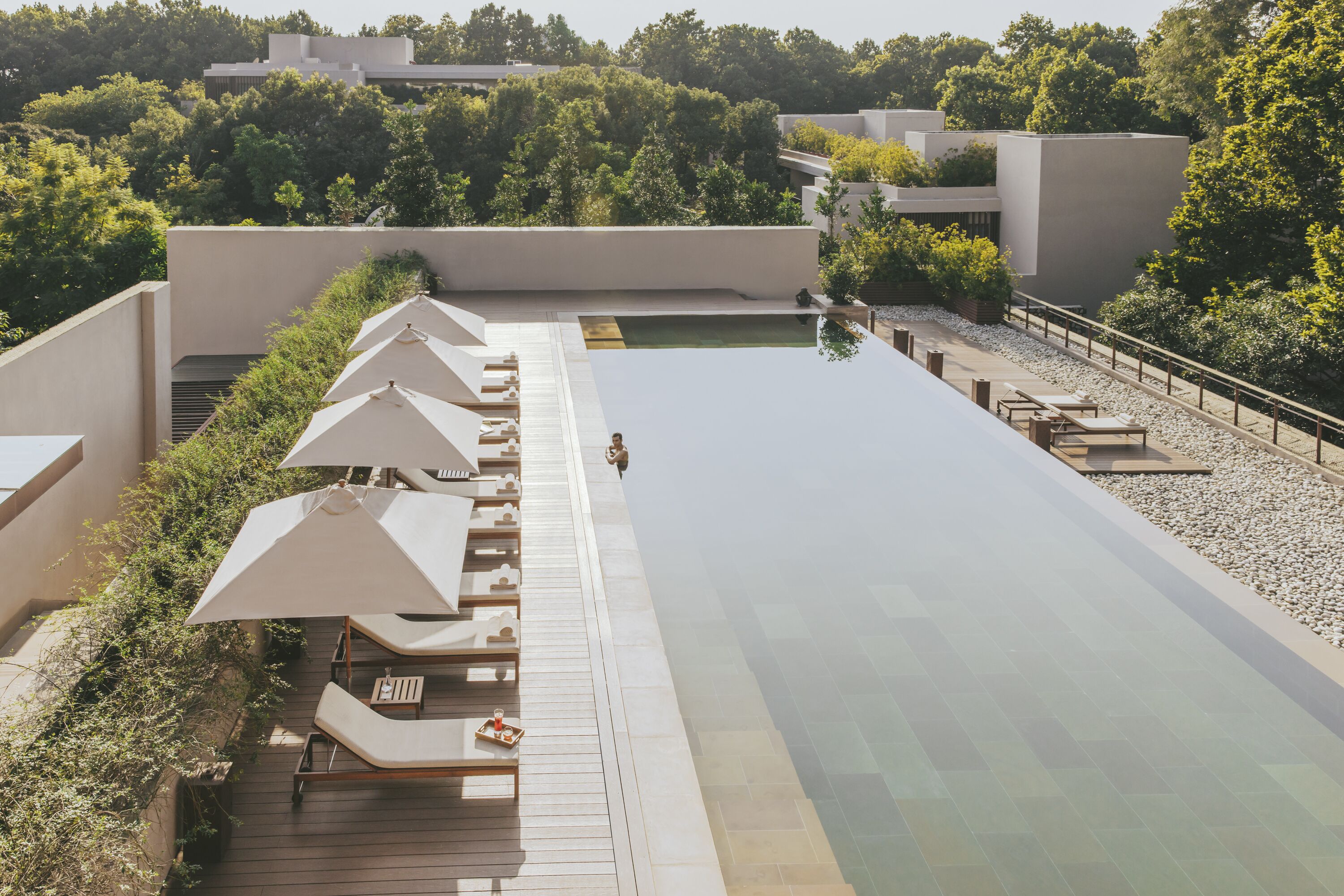
Ananda in the Himalayas sits on a maharaja's estate above Rishikesh. It offers yoga, Ayurveda and Vedanta programmes. If breathwork is your priority, ask what is included before you book.
Learn fast breathing styles and long breath holds with an instructor rather than from a video. A good instructor will also ask about your health before choosing techniques.
FAQ
Can breathwork replace medication for anxiety?
No, and no reputable practitioner should suggest it can. Breathwork can be a helpful tool for calming down in the moment. In the Stanford study, people felt less anxious after their sessions. It is not a substitute for professional care for a diagnosed condition. Speak to your doctor before changing any medication.
How long does it take to feel an effect?
It varies. In the Stanford study, people said they felt less anxious after their sessions. The study used five minutes a day for a month, and benefits grew with more days of practice. It helps to give it time.
Is box breathing or slow-exhale breathing better?
The research does not settle this. In the Stanford study, cyclic sighing, which stresses a long exhale, did best on mood. Box breathing also lifted mood. Slow exhale is the easiest place to start because it has no breath holds.
Explore more mindfulness retreats and yoga retreats, or browse our full hotel directory.